My Cart
Loading...

8 different types of skis explained
Ski
25 April 2024
/
Written by Rick
In this guide, we explain the 8 main types of skis, what they are designed for, and which ski type best matches your skiing style, ability level, and terrain.
Choosing the right skis can be overwhelming, especially with so many different types available. In this article distinguish eight types of skis:
- Race skis
- Piste skis
- Piste / all-mountain skis
- All-mountain / freeride skis
- Freeride skis
- Powder skis
- Freestyle skis
- Touring skis
Between ski types is some overlap. If you look at the shape of a ski from above, you can broadly identify the following skis, differing in width, waist and shape of the ski.

Below, we explain the different types of skis and the terrain they are designed for. We distinguish eight ski types by further breaking down the main categories of piste, all-mountain, and freeride skis.
Quick overview: types of skis
| Ski type | Best for | Terrain | Skill level |
| Race skis | High-speed carving | Piste | Advanced-experts |
| Piste skis | Controlled turns | Piste | Beginner-advanced |
| Piste / All-mountain skis | Versatility | Piste & light off-piste | Beginner-intermediate |
| All-mountain / Freeride skis | Mixed conditions | Piste & off-piste | Intermediate-advanced |
| Freeride skis | Off-piste | Off-piste | Advanced-expert |
| Powder skis | Deep powder conditions | Deep powder | Advanced-expert |
| Freestyle skis | Tricks & jumps | Park & piste & off-piste | Intermediate-expert |
| Touring skis | Uphill & downhill touring | Backcountry | Intermediate-expert |
Race skis
Race skis are designed for maximum edge grip, precision, and speed. These skis are stiff with a narrow waist and built for aggressive carving on hard snow.
If you enjoy speeding down the slopes, then you can push yourself to your limit with a pair of race skis. These skis are stiffer than piste skis, which helps them remain stable at high speeds. However, you need to ski these skis with a certain amount of power, and they are not meant for slow skiing.
Race skis are often available in slalom (SL), giant slalom (GS) or crossover models. Each model has its own radius, so there is always a race ski that suits you.

Key characteristics:
- Stiffer than piste skis
- Stable at high speeds
- Width underfoot between 65 and 75 mm
- Ski profiles: camber, rocker-camber-flat
Best for: experienced skiers who ski fast and with strong technique on groomed slopes.
Piste skis
Piste skis are for anyone who enjoys gliding over the slopes, from absolute beginners to highly experienced skiers. However, these skis are specifically designed for on-piste skiing. Piste skis have a small rocker in the tip that helps to easily steer through a turn. The stiffer the ski, the more suitable it is for high speeds and carving.
Key characteristics:
- Small rocker in the tip for easy turning
- Width underfoot between 65 and 80 mm
- Ski profiles: camber, rocker-camber-flat, rocker-camber-rocker, rocker-camber-small rise
Best for: beginners to advanced skiers who spend most of their time on groomed slopes.


Piste / All-mountain skis
These are narrow all-mountain skis with a width underfoot up to 90 mm. They are designed for on-piste skiing but are also suitable for cutting through the off-piste or skiing alongside the piste. The wider the ski, the more it focuses on all-mountain skiing. These skis have a rocker in the tip to help making turns easily. A wider all-mountain ski has a larger rocker, providing extra float in softer and deeper snow.
Key characteristics:
- Rocker in the tip for easy turning
- The wider the ski, the larger the rocker for additional float
- Width underfoot between 75 and 90 mm
- Ski profiles: rocker-camber-small rise, rocker-camber-flat, rocker-camber-rocker, camber
Best for: adventurous piste skiers who want flexibility for changing snow conditions and occasionally venture off-piste.

View all piste / all-mountain skis
All-mountain / Freeride skis
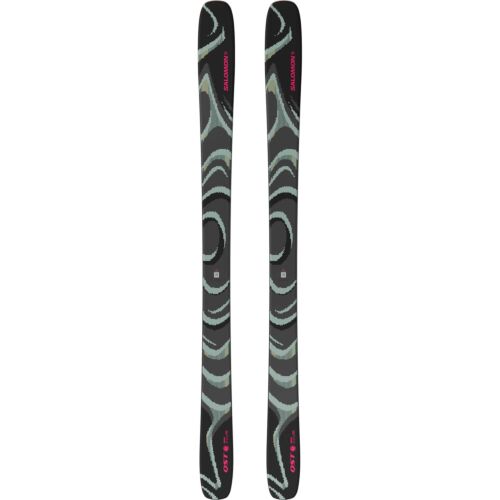
All-mountain skis are the most versatile option and perform well all over the mountain. You can carve on the piste with them and they have enough float for enjoyable off-piste skiing.
Key characteristics:
- Width underfoot between 90 and 100 mm
- Ski profiles: rocker-camber-small rise, rocker-camber-flat, rocker-camber-rocker, camber, rocker-flat-rocker
Best for: adventurous skiers who want one ski for all conditions.


View all all-mountain / freeride skis
Freeride skis
Freeride skis are designed for skiing off-piste, seeking freedom and fresh untouched snow. In terms of usage, these skis fall between all-mountain skis and dedicated powder skis. They are versatile skis with a clear focus on off-piste skiing.
Key characteristics:
- Width underfoot between 90 and 115 mm
- Ski profiles: rocker-camber-small rise, rocker-camber-flat, rocker-camber-rocker, rocker-flat-rocker, full rocker
Best for: advanced skiers who ski mostly off-piste.


Powder skis
You won't get more float in powder snow than with powder skis. These are very wide skis with significant rockers, designed for fresh and deep snow. They provide a true surfing sensation in powder snow!
Key characteristics:
- Width underfoot 110 mm and wider
- Ski profiles: rocker-camber-small rise, rocker-camber-rocker, rocker-flat-rocker, full rocker
Best for: true powder enthusiasts seeking optimal performance in deep powder.

Freestyle skis
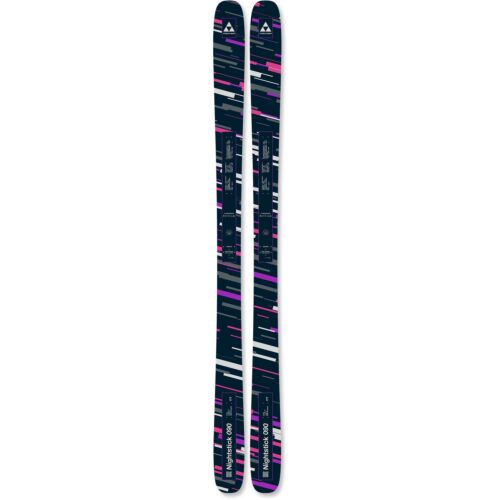
This type of ski is for people who love tricks. Jumping, tail grabs, riding switch, these skiers see the mountain as a big playground. Freestyle skis have a twin-tip design, where the skis are sometimes fully symmetrical in the flex. This allows skiing both forwards and backwards. The skis are designed for stability and agility to perform tricks and maneuvers with ease and control. Freestyle skiers are often found in the fun park or backcountry seeking jumps. All skis in this category are playful and best suited for an open-minded skiing style. The skis come in various widths. Thus, the narrower ones are more piste and park-oriented and the wider skis for good performance in powder.
Key characteristics:
- Twin-tip design for riding switch
- Designed for stability and agility to perform tricks and maneuvers with ease and control
- Width underfoot ranges from 85 to 120 mm, depending on usage
- Ski profiles: rocker-camber-rocker, rocker-flat-rocker, camber
Best for: skiers who love tricks and enjoy creative riding.



Touring skis
Essentially, these are good freeride skis with a focus on lightweight construction for climbing and walking on steep terrain. Within touring skis, there are two types to distinguish. There are tour skis, where the focus is on efficiency when climbing. The design here focuses solely on being as light as possible. Then there are touring skis that are more downhill-oriented. These touring skis provide a bit more comfort in the descent and may be wider for more float in powder snow, for example.
Key characteristics:
- Ski profiles: rocker-camber-small rise, rocker-camber-flat, rocker-camber-rocker, full rocker, camber
Best for: touring skiers who want to explore the backcountry.


What type of ski suits you?
Are you still unsure about which ski to choose after reading this snowhow? Then take a look at our buyer's guide, in which we also look at the ski profile, your level and which length ski would suit you. Of course you can always contact our ski experts for ski advice. They have skied many of the skis in our assortment themselves, so they can think along with you about the best type of skis for you.
Do you have any questions after reading this article?
Please contact us for personalized advice. We are more than happy to help.