
My Cart
Loading...

Kessler Spectra 23/24

This product is not in stock
This product is currently not in stock or discontinued. Contact our customer service for an alternative or delivery estimate.
To customer service
Showroom pick code
Scan with the pick app
- Our customers rate us 9.6 out of 10
- Fast world wide shipping
- Ordered before 16:00 CET, Shipped the same business day
Product properties
Personality
Soft & playful
Medium
Stiff & aggressive
Level
Beginner
Intermediate
Advanced
Highly Advanced
Expert
Important details
| Season | 2023-2024 |
|---|---|
| Style | All-Mountain, Freeride, Carve |
| Profile | Directional Rocker-Camber-Rocker |
| Shape | Directional |
| Personality | Medium-Stiff & Responsive |
| Snowboard Fibers Core | Triax |
In short
What a perfect day! Blue skies, fresh powder, and a fresh untouched slope … It is as if it was made for the Kessler Spectra. With this board on your feet you will be able to glide through the powder spots just as impressively as cruising on untouched slopes. Will only the best do? Then the Spectra is for you! Based on decades of experience spent customizing boards for the world’s top snowboarders, Kessler has created the perfect all-mountain solution with only the top materials that can meet the demands of all-mountain snowboarding.
In detail
PROFILE
- Camber with Clothoide tail & tip rocker
- Clothoid Sidecut
An important component of the legendary KST is the sidecut which is based on a clothoid geometrical formula. This optimal geometry defines the radii on the board or ski with pin point accuracy. These can then be accessed by the rider by tilting the ski or board without force. The more the ski or board edges, the further the front contact point moves to the nose, and respectively, the back contact point to the tail. In this way, the rider can intentionally choose the radius that occurs at the point that is edging and actively determines the curve. The further forward the contact point lies, the tighter the turn possible. When carving, this provides riders with an essential advantage over traditional skis and snowboards where often the material defines the course.
CORE
- Optimized K.Tec BP Woodcore
Woodcore specifically created by Kessler. Durable and strong combination made of poplar, beech and fir wood.
REINFORCEMENTS
- Sandwich Construction
BASE
- Sintered Base
Fully sintered black race base, higher molecular weight with small amount of PTFE (Teflon) mixed into the base. This makes it harder, faster and stronger.
SIDEWALL
- ABS Sidewalls
Provides enhanced durability while keeping the core safe from moisture.
Technical
Characteristics
-
 Profile
Directional Rocker-Camber-Rocker
The camber between the feet provides grip and power, while the longer rocker in the nose improves float and makes turn initiation easier. The shorter rocker in the tail makes the board easier to steer and creates a more playful, forgiving ride than Camber-Rocker-Camber. You will mainly find this profile in all-mountain and freeride boards.
-
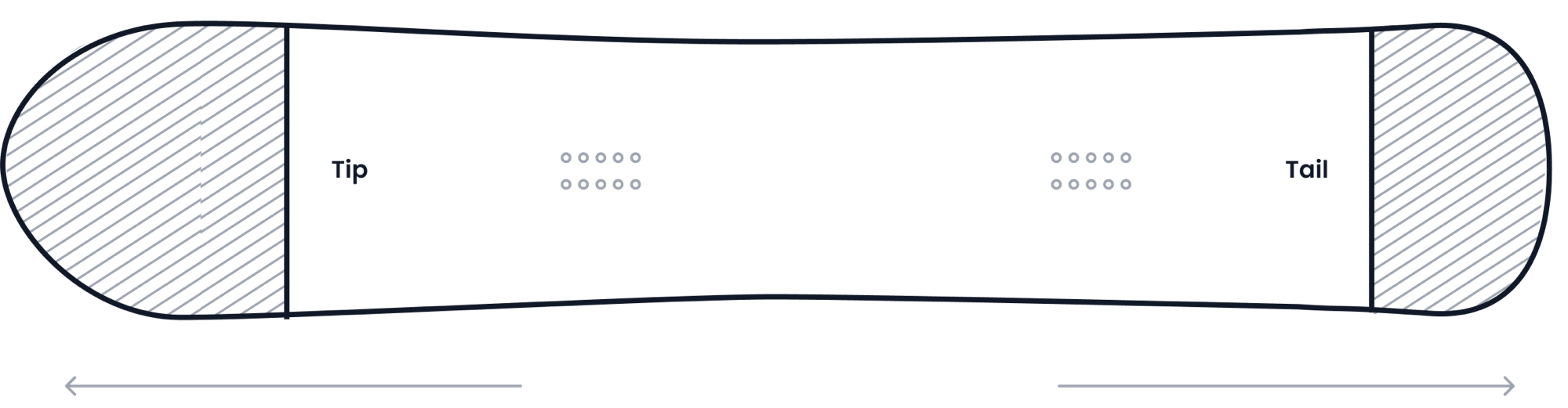 Shape
Directional
On a directional snowboard, the nose and tail are deliberately designed differently, and the board is intended to be ridden primarily in one direction. The nose is often longer and wider than the tail, while the stance is positioned further back. These features are known as taper and setback. The nose also often has a softer flex than the tail. This combination provides additional float in powder, smooth turn initiation and greater stability at speed. Directional shapes are mainly found on all-mountain, freeride and powder boards.
-
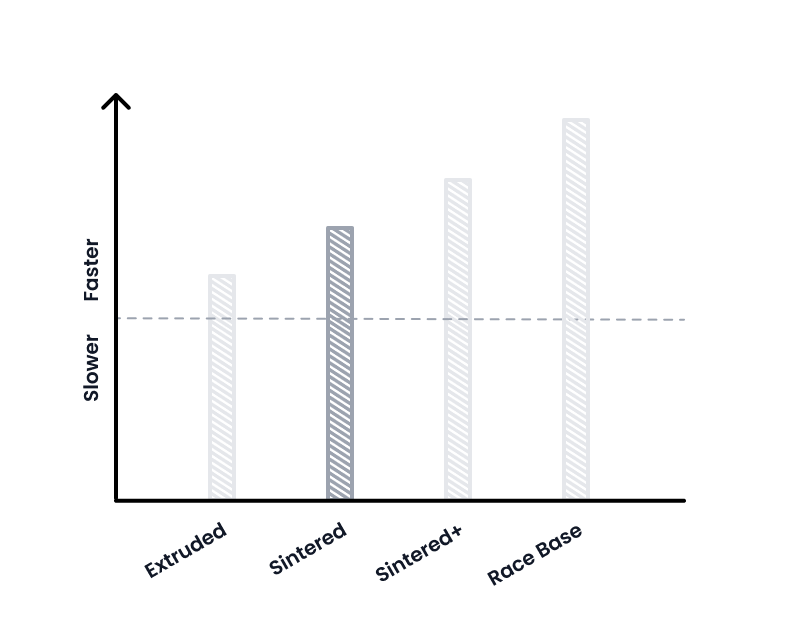 Base Speed
Sintered
A sintered base is compressed under high pressure and has a porous structure that absorbs plenty of wax. This makes the base faster and allows it to perform better in changing snow conditions. The material is harder and more wear-resistant than an extruded base, but it requires regular waxing and is more difficult to repair. A good choice for advanced riders who value speed and performance.
-
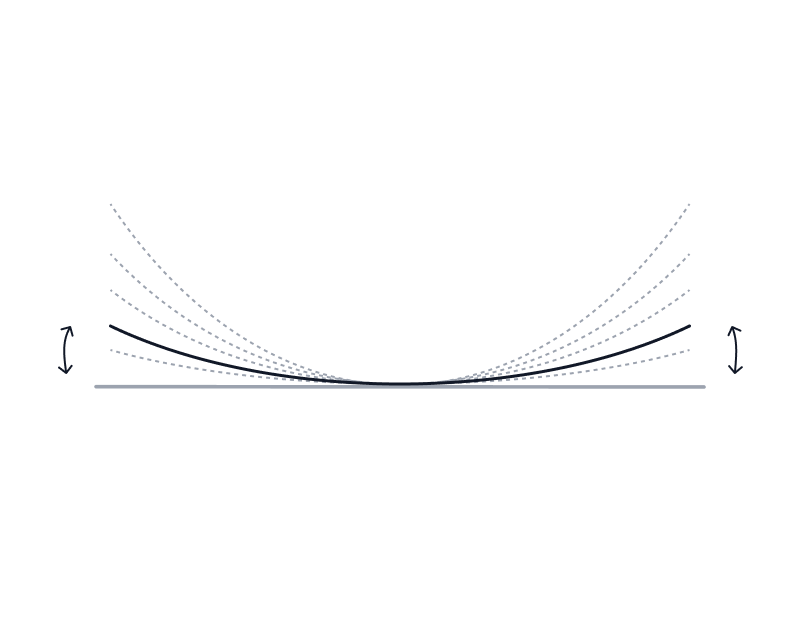 Flex
Medium-Stiff & Responsive
A medium-stiff flex provides more edge hold, response and stability at higher speeds. The board requires a more active riding style but delivers extra control during powerful carves and in challenging terrain. This flex suits experienced riders who enjoy all-mountain, freeride or technical freestyle riding.
Size chart
SIZECHART
| Kessler The Spectra 23/24 Sizechart | |||||||
|---|---|---|---|---|---|---|---|
| Size (cm) | 148 | 153 | 158 | 163 | 168 | ||
| Tip width | 290 mm | 294 mm | 297 mm | 304 mm | 310 mm | ||
| Waist width | 238 mm | 242 mm | 246 mm | 250 mm | 258 mm | ||
| Tail width | 275 mm | 279 mm | 282 mm | 289 mm | 296 mm | ||
| Side cut range | 6-9.5 m | 6.5-9.5 m | 7-10 m | 8-11 m | 9-12 m | ||
| Recommended stance | 500 mm | 520 mm | 540 mm | 560 mm | 580 mm | ||
| Stance range (mm) | 460-540 | 480-560 | 480-560 | 500-580 | 520-600 | ||
| Rider weight | 40-60 kg | 50-65 kg | 55-75 kg | 60-85 kg | 65-95 kg | ||