
My Cart
Loading...

GNU Turbo Gremlin 26/27

€639.99

Loading...
Showroom pick code
Scan with the pick app
- Our customers rate us 9.6 out of 10
- Fast world wide shipping
- Ordered before 16:00 CET, Shipped the same business day
Product properties
Terrain
Fun Carve
9
All Mountain
8
Freeride
8
Personality
Soft & playful
Medium
Stiff & aggressive
Level
Beginner
Intermediate
Advanced
Highly Advanced
Expert
Important details
| Season | 2026-2027 |
|---|---|
| Style | All-Mountain, Freeride, Carve |
| Profile | Camber |
| Shape | Directional |
| Personality | Medium-Stiff & Responsive |
| Snowboard Core Types | Paulownia, Aspen |
| Snowboard Fibers Core | Biax / Triax |
In short
GNU Turbo Gremlin is what happens when the Gremlin gets impatient. It is narrower, quicker, and more fired up edge to edge, built for riders who want the same freeride bite with less hesitation. The nose still wants soft snow, but the board really starts grinning when you lay it over on hardpack and let it run. There is snap in the tank and enough control to keep the wheels on when the mountain gets chopped up. Turbo is the Gremlin after a double shot of espresso at 2 AM.
In detail
SHAPE
- Directional Shape
A directional shape is tuned to ride strongest in one direction, with geometry that supports float, edge hold and stability at speed. A more pronounced nose helps the board stay composed in softer snow, while the tail gives support and power through turns. This shape is made for riders who like to charge, carve and explore the mountain with a confident, planted feel.
CORE
- G Lite 3 Carbon Core
GNU’s lightest and most powerful core construction, built with FSC certified aspen and paulownia for a strong, lively and low-weight ride. This construction is tuned for more pop, faster response and a more energetic feel underfoot. It gives high-performance boards the snap, precision and strength needed for aggressive all-mountain riding.
- Tri-Ax/Bi-Ax Glass
GNU combines tri-axial and bi-axial fiberglass to give the board a strong, poppy and responsive ride. The bi-axial glass keeps the flex smooth and manageable, while the tri-axial glass adds power, precision and edge-to-edge response. Together they create a construction that feels active without becoming nervous.
- Carbon Power Bands
Carbon Power Bands add extra pop, response and long-lasting performance to the board. They strengthen the construction without taking away its lively feel, giving more energy back when you load the board through turns, ollies and landings. The result is a snappier, more powerful ride with added precision when you push harder.
SIDECUT & EDGES
- Magne-Traction
Magne-traction is a wavy-edged snowboard. Just like a serrated knife that cuts through bread, Magne-Traction cuts through the snow. Gnu uses seven tactically placed waves in the steel edge, which results in a lot of grip in icy and tough conditions.
- UHMW Sidewall
UHMW is used in the sidewalls, tips and tails to create a tough and fast construction around the board’s edges. This durable material helps protect the core from impact while keeping the board strong through heavy use. It adds the kind of reliable edge-zone strength you want when riding hard across the whole mountain.
BASE & TOPSHEET
- Eco Sublimated Poly Top
GNU’s Eco Sublimated Poly Top is a strong polyester topsheet made in the Mervin factory. The sublimated graphic process keeps the artwork clean and durable, while the material itself is built to handle regular mountain use. It gives the board a tough, clean finish with a more environmentally considered construction.
- Sintered Knife-Cut Base
GNU’s Sintered Knife-Cut Base is built for speed, durability and strong wax absorption. The sintered structure holds wax well, helping the board stay fast when properly maintained. It is a tough, high-performance base for riders who push hard and want reliable glide across changing snow conditions.
Technical
Characteristics
-
 Profile
Camber
Camber provides strong edge hold, stability and control, especially on hardpack and at higher speeds. The profile delivers plenty of pop and power for carving and jumping. Camber feels direct and precise but is less forgiving than rocker, making it less suitable for deep powder and beginners. You will mainly find this profile in boards designed for skilled, technical riders on the slopes and in the park.
-
 Shape
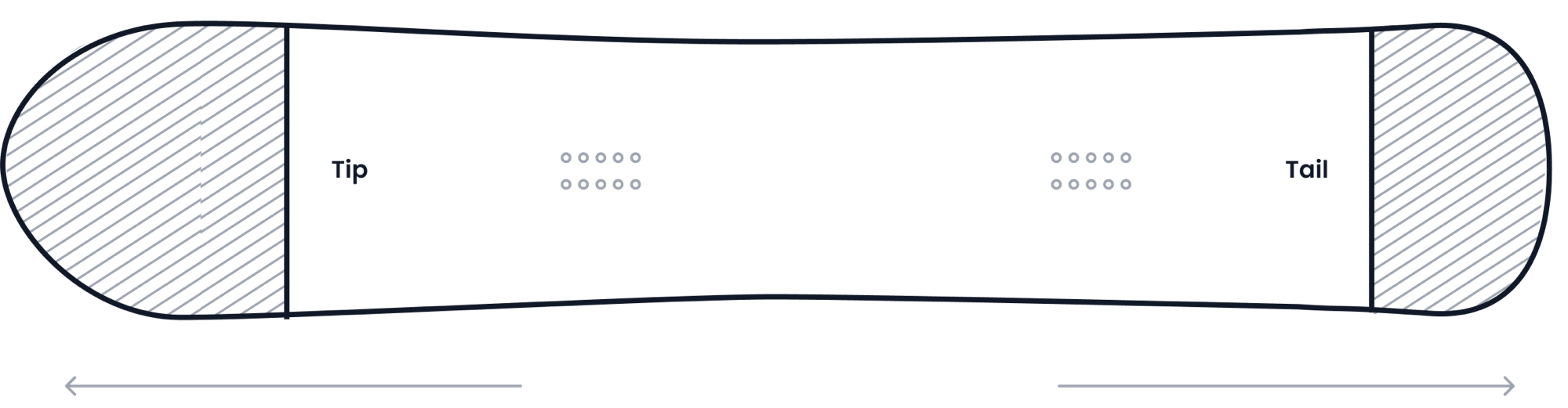
Directional
On a directional snowboard, the nose and tail are deliberately designed differently, and the board is intended to be ridden primarily in one direction. The nose is often longer and wider than the tail, while the stance is positioned further back. These features are known as taper and setback. The nose also often has a softer flex than the tail. This combination provides additional float in powder, smooth turn initiation and greater stability at speed. Directional shapes are mainly found on all-mountain, freeride and powder boards.
-
 Base Speed
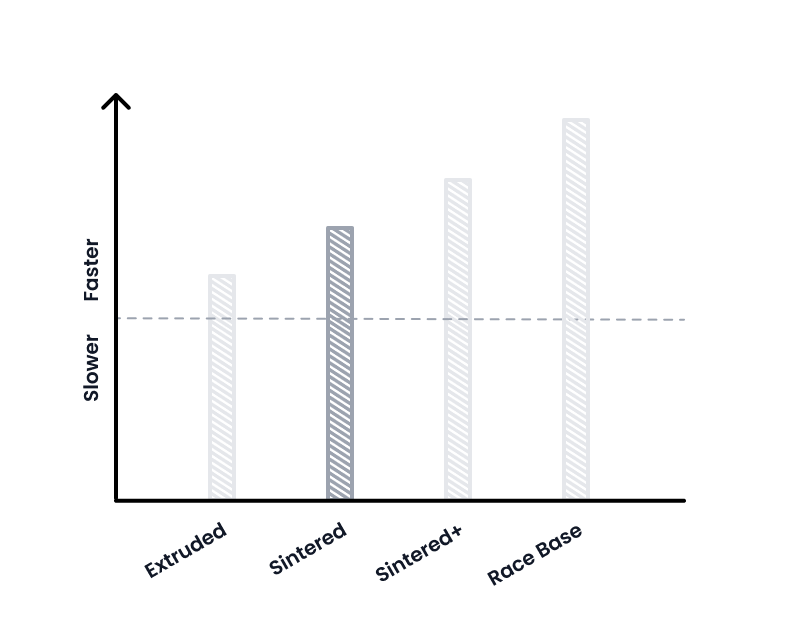
Sintered
A sintered base is compressed under high pressure and has a porous structure that absorbs plenty of wax. This makes the base faster and allows it to perform better in changing snow conditions. The material is harder and more wear-resistant than an extruded base, but it requires regular waxing and is more difficult to repair. A good choice for advanced riders who value speed and performance.
-
 Flex
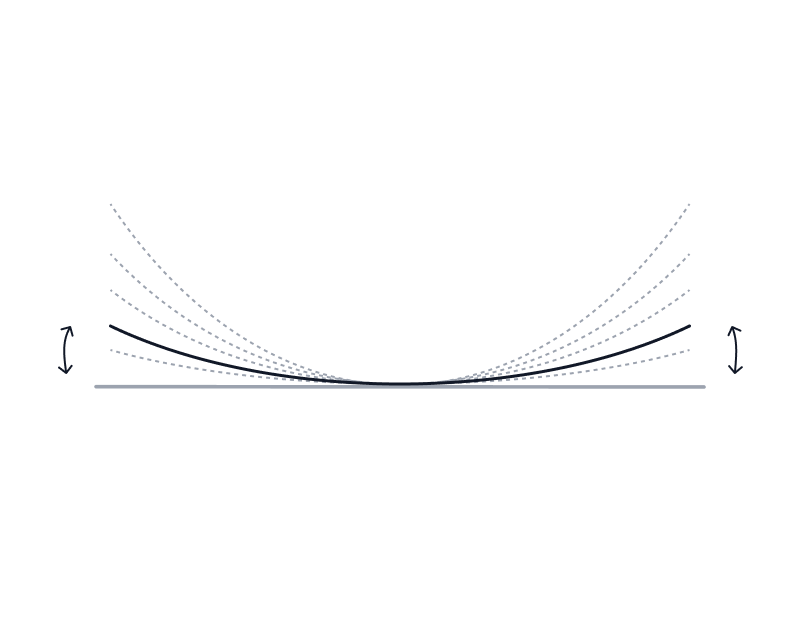
Medium-Stiff & Responsive
A medium-stiff flex provides more edge hold, response and stability at higher speeds. The board requires a more active riding style but delivers extra control during powerful carves and in challenging terrain. This flex suits experienced riders who enjoy all-mountain, freeride or technical freestyle riding.
Size chart
| GNU Turbo Gremlin | 155 | 158 | 161 |
|---|---|---|---|
| Nose Width (cm) | 30.5 | 31.1 | 31.5 |
| Waist Width (cm) | 25.5 | 26.1 | 26.3 |
| Tail Width (cm) | 29.2 | 29.9 | 30.2 |
| Rider Weight Range (kg) | 65+ | 70+ | 75+ |
| Rider Weight Range (lbs) | 140+ | 145+ | 150+ |
| Sidecut Radius (m) | 7.2 | 7.5 | 7.7 |
| Contact Length (cm) | 108 | 110 | 112 |
| Stance (cm) | 48.9–60.9 | 48.9–60.9 | 48.9–60.9 |
| Setback (cm) | 7.6 | 7.6 | 7.6 |