
My Cart
Loading...

Weston Backcountry Gnarnia 25/26

€649.95
€519.96

Loading...
Showroom pick code
Scan with the pick app
- Our customers rate us 9.6 out of 10
- Fast world wide shipping
- Ordered before 16:00 CET, Shipped the same business day
Product properties
Terrain
Freeride
9
All Mountain
8
Powder
8
Personality
Soft & playful
Medium
Stiff & aggressive
Level
Beginner
Intermediate
Advanced
Highly Advanced
Expert
Important details
| Season | 2025-2026 |
|---|---|
| Style | All-Mountain, Freeride |
| Profile | Directional Rocker-Camber-Rocker |
| Shape | Directional |
| Personality | Medium-Stiff & Responsive |
| Snowboard Core Types | Poplar, Paulownia, Bamboo |
| Snowboard Fibers Core | Triax |
In short
Go big or go home! The Weston Gnarnia is your versatile all-mountain board with freeride roots. It is a directional with two carbon stringers, like a V in the tail. This gives you a load of response, edge-to-edge transitions, and hard-charging capabilities. Directional camber between the bindings and a fair amount of setback make it nimble enough to ride those epic chutes. Gnarnia does not ask permission to charge.
In detail
SHAPE
- Tapered Directional
A directional shape with taper for easier float, smooth turn initiation and confident control in freeride terrain. The nose stays loose in soft snow while the tail keeps power and stability underfoot.
CORE
- Conqueror Core
A core built with poplar, paulownia and carbon for power, precision and response. Used in the Gnarnia to support big lines, heavy landings and daily freeride charging.
- Tri-axe Glass
Multi-axis, stitched fiberglass laminate. This laminate offers a precise and responsive ride in any terrain or snow conditions.
- Carbon S Weave
Carbon S Weave is an innovative technology where carbon is weaved through the core from topsheet to base and back. This creates maximum pop.
- Carbon Tail V
Carbon fiber runs from the tail inserts to the tail contact points. This adds edge to edge response and spring in the tail.
SIDECUT & EDGES
- PU Sidewalls
Highly durable sidewall that also provides added dampening.
BASE & TOPSHEET
- Rugged Topsheet
Polymide is eco friendly and made from castor beans. The topsheet is durable and resistant to scratches and scuffs.
- Sintered 4001
Fast ride, more durable, good wax retention.
Technical
Characteristics
-
 Profile
Directional Rocker-Camber-Rocker
The camber between the feet provides grip and power, while the longer rocker in the nose improves float and makes turn initiation easier. The shorter rocker in the tail makes the board easier to steer and creates a more playful, forgiving ride than Camber-Rocker-Camber. You will mainly find this profile in all-mountain and freeride boards.
-
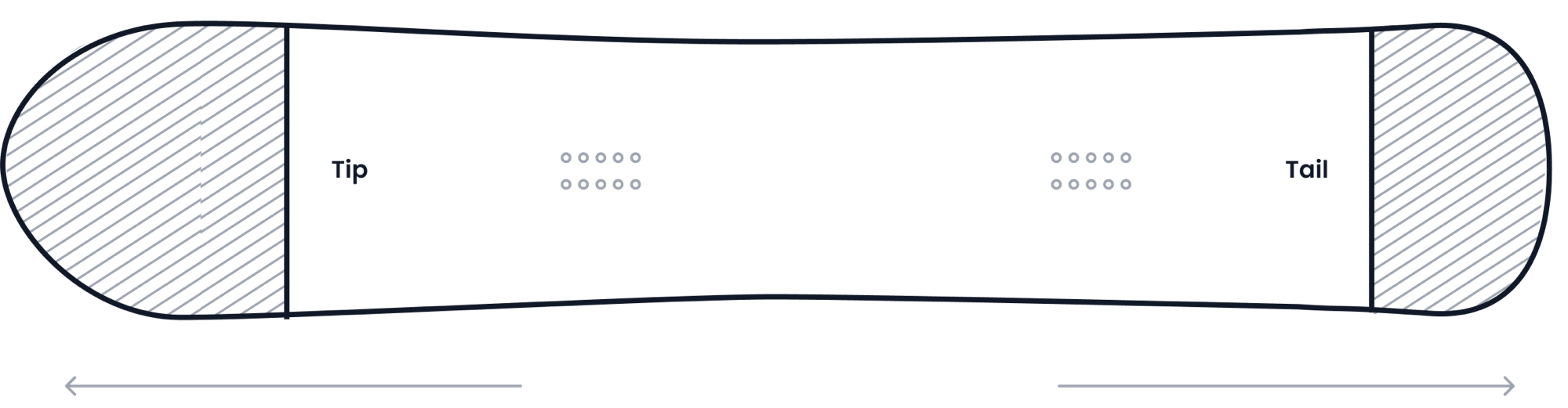 Shape
Directional
On a directional snowboard, the nose and tail are deliberately designed differently, and the board is intended to be ridden primarily in one direction. The nose is often longer and wider than the tail, while the stance is positioned further back. These features are known as taper and setback. The nose also often has a softer flex than the tail. This combination provides additional float in powder, smooth turn initiation and greater stability at speed. Directional shapes are mainly found on all-mountain, freeride and powder boards.
-
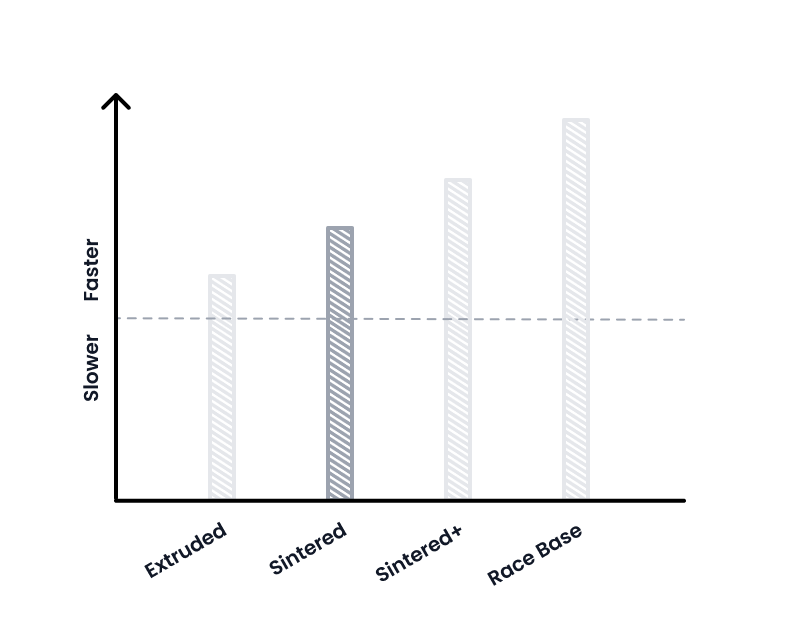 Base Speed
Sintered
A sintered base is compressed under high pressure and has a porous structure that absorbs plenty of wax. This makes the base faster and allows it to perform better in changing snow conditions. The material is harder and more wear-resistant than an extruded base, but it requires regular waxing and is more difficult to repair. A good choice for advanced riders who value speed and performance.
-
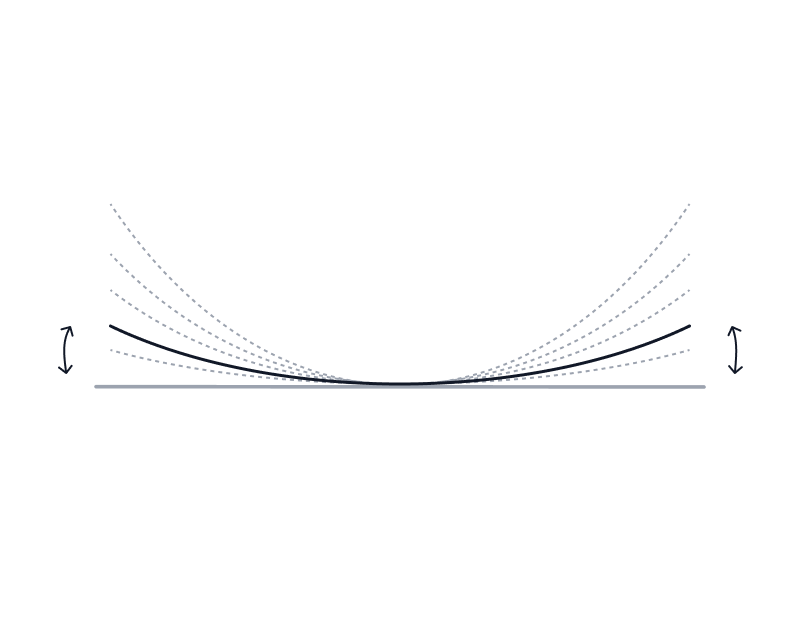 Flex
Medium-Stiff & Responsive
A medium-stiff flex provides more edge hold, response and stability at higher speeds. The board requires a more active riding style but delivers extra control during powerful carves and in challenging terrain. This flex suits experienced riders who enjoy all-mountain, freeride or technical freestyle riding.
Size chart
| Gnarnia Snowboard Size Chart | |||||||
|---|---|---|---|---|---|---|---|
| Size | 147 | 151 | 154 | 158 | 162 | 162W | 166W |
| Weight kg | 2.28 | 2.353 | 2.546 | 2.793 | 2.925 | 3.092 | 3.338 |
| Weight lb | 5.02 | 5.18 | 5.6 | 6.14 | 6.44 | 6.8 | 7.34 |
| Tip Width (cm) | 28.8 | 29 | 29.9 | 30.4 | 31 | 32.2 | 32.7 |
| Waist Width (cm) | 24.4 | 24.6 | 25.2 | 25.6 | 26.2 | 27.3 | 27.6 |
| Tail Width (cm) | 27.9 | 28.1 | 29 | 29.5 | 30.1 | 31.3 | 31.8 |
| Sidecut (m) | 9.3/7.4/7.1/8.4 | 9.5/7.6/7.3/8.6 | 9.7/7.8/7.5/8.8 | 9.9/8/7.7/9 | 10/8.1/7.8/9.1 | 10/8.1/7.8/9.1 | 10.2/8.3/8/9.3 |
| Taper (mm) | 9 | 9 | 9 | 9 | 9 | 9 | 9 |
| Setback (mm) | 10 | 10 | 20 | 20 | 20 | 20 | 20 |
| Front Binding Width (cm) | 25.6 | 25.8 | 26.1 | 26.6 | 27.1 | 28.3 | 28.6 |
| Rear Binding Width (cm) | 25.2 | 25.3 | 26.1 | 26.6 | 27.1 | 28.3 | 28.6 |